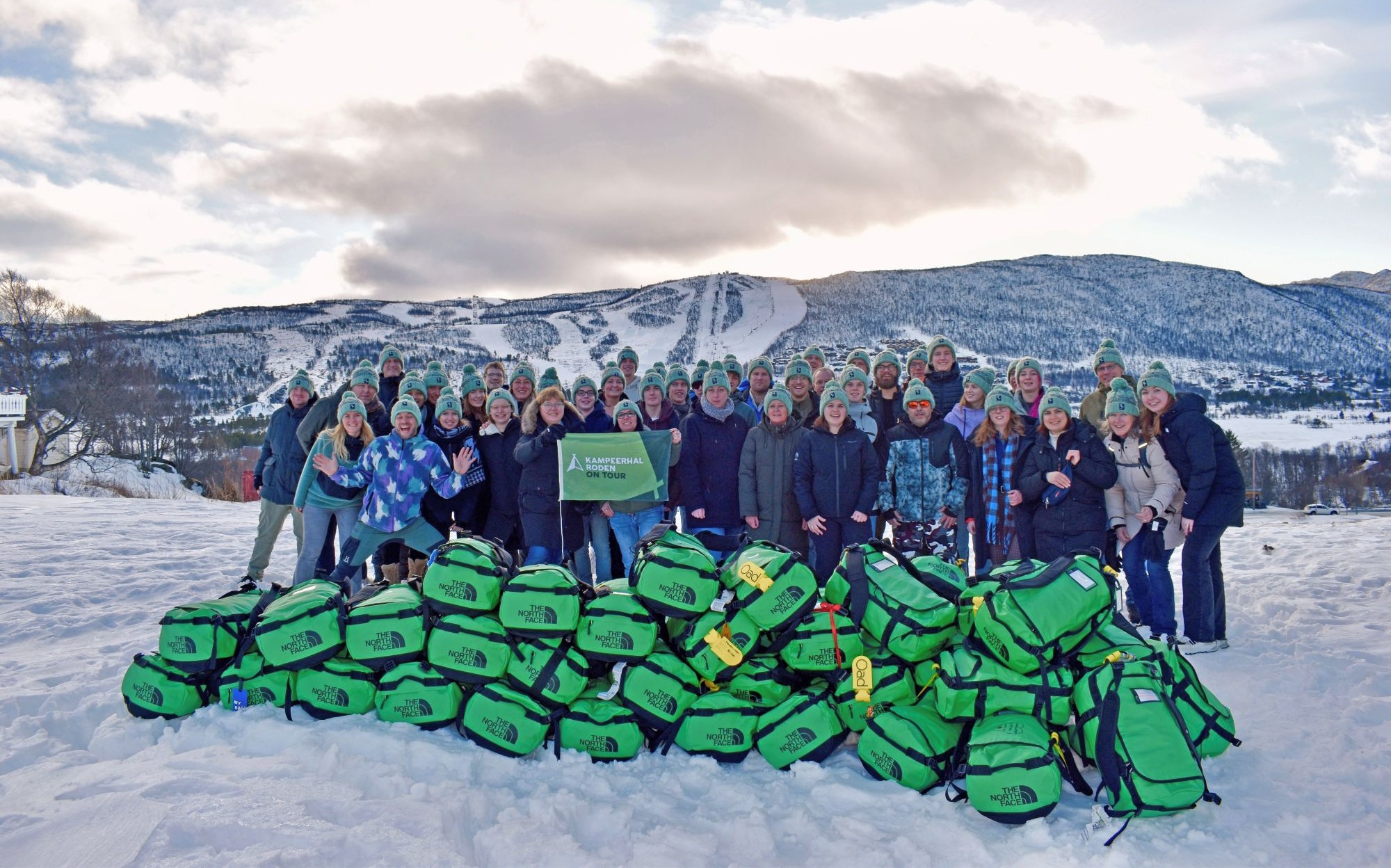

Traditional retail is struggling in the Netherlands. This is due to the rise of online shopping, demanding consumers, and high rents, labor costs, and energy rates. Bucking the trend, Kampeerhal Roden in Drenthe is actually expanding. They’re doing so with funding from, among others, MKB Fonds Drenthe. Richard Kremer (co-owner of Kampeerhal Roden) and Emmy Saimi Roozeboom (investment manager at MKB Fonds Drenthe) discuss the company’s growth.
“The owners of Kampeerhal Roden are ambitious and have already shown that they can turn their ambitions into reality,” says Saimi-Roozeboom enthusiastically. Kampeerhal Roden is the kind of company that MKB Fonds Drenthe is proud to invest in—twice now. “When the gentlemen started the store in 2019, we provided funding, and we did so again recently.” Kampeerhal Roden is a 20,000-square-meter store offering “everything for the outdoors”—from camping to hiking and from fishing to barbecuing. “With such a huge retail space, you can imagine that we have a substantial inventory,” says Kremer. “That was one of the reasons we needed funding at the start. Not only did we have to pay wages, but we also had to purchase inventory. That amounted to millions.” With 150 employees in the summer and about 80 in the winter, Kampeerhal Roden is a major employer in Roden and the surrounding area. And the hundreds of thousands of customers who visit each year also bring business to the surrounding establishments. “The snack bar next door, for example,” says Saimi-Roozeboom.
A bird's-eye view and guts
When asked what sets this retailer apart from many others, Kremer replies: “It’s important to take a bird’s-eye view of your store. Observe how the landscape is changing and how you can adapt your business accordingly. You have to be bold—not just you, but your employees as well.” “Our number one rule, therefore, is that employees are allowed to come up with their own ideas, and we actually put them into practice. An example? An employee came up with a unique type of winter slippers. Crazy, bright colors, fur-lined on the inside… completely outside our comfort zone. But that person believed in them and had already created a plan to promote them on social media, so we bought them in. Guess what—they practically sold out!” “Giving employees a lot of freedom and responsibility is part of being a good employer. That’s important in times of a tight labor market,” adds Saimi-Roozeboom.
In addition to daring to experiment with the product range, diversification is key. “We’re called Kampeerhal Roden, but we offer more than just camping gear. Actually, we have everything for the outdoors. A third of our product range is for camping. The rest is for the garden, barbecuing, hiking, fishing, and travel. We also carry casual clothing.” In addition, Kampeerhal Roden launched an online store a few years ago to complement its brick-and-mortar location. “Revenue is now split 50-50; half comes from the store, and the other half from the online store. So our revenue has grown tremendously thanks to the online store,” says Kremer.
Growth Requires Investment
That revenue growth calls for new investments. “Until recently, we were renting the property in Roden. We paid a revenue-based rent for it. In the early years, that was favorable, but with our current revenue, it became disproportionate. So we decided to buy the building. At the same time, we wanted to expand the warehouse. We needed funding for that purchase and the new construction, because our money is tied up in our inventory. So we do have equity, but it’s not available for spending,” explains Kremer. “That’s why MKB Fonds Drenthe helped us out again.” “Kampeerhal Roden is growing incredibly fast, which requires a lot of working capital. We provide a portion of risk-bearing capital here. Unlike a bank, we don’t just look at the numbers, but also at softer factors, such as the entrepreneurs’ vision,” says Saimi-Roozeboom.
To grow, you have to be bold—not just you, but your employees as well.
Richard Kremer Co-owner of Kampeerhal Roden
Expanding Sales to Germany
The purchase of the building and the expansion of the warehouse were only just completed in the spring of 2026, and the management of Kampeerhal Roden is already planning further growth. “In five years, online sales will have tripled, and the ratio between the physical store and the online store will be 25-75,” predicts Kremer. “We’re also expanding our product range. Take shoes, for example: in addition to hiking and athletic shoes, we’ll soon be offering rubber boots and casual shoes as well,” he says. “And by then, we’ll be well-known in Germany, too. We already have a few German customers online. Through Amazon—the market leader for online shopping in Germany—we want to grow that customer base. We’re currently testing how things work on Amazon with a number of products. We’re also launching a campaign in Germany for the brick-and-mortar store, just across the border from Groningen,” Kremer explains about the plans. He has no doubt that the Drenthe SME Fund will be able to help with this again. “They provide us with that final bit of funding that we can’t secure on our own, and they’re flexible and reliable.”